
If your cat keeps coughing, it’s natural to feel concerned. Cat coughing is not as common as it is in dogs, which means when a cat coughs repeatedly or persistently, it’s worth paying attention. A cough in a cat can range from a minor irritant to a sign of a serious underlying condition. This guide covers the most common causes of cat coughing, what the different types of coughs can tell you, and when to call your veterinarian at World of Animals Veterinary Hospital.
What Does It Mean When a Cat Coughs?
Cat coughing is the body’s reflex response to irritation or obstruction in the airways. When a cat coughs, it’s attempting to clear something from the throat, trachea, or lungs. Unlike humans, cats don’t cough frequently as a normal part of daily life. A cat that coughs occasionally, meaning once every few days or less, might simply have a minor irritant in the airway. But a cat that coughs repeatedly, coughs in clusters, or coughs in combination with other symptoms is likely experiencing something that deserves veterinary attention.
Common Causes of Cat Coughing
There are several conditions that commonly cause a cat to cough. Some are mild and manageable; others require prompt medical care.
Feline Asthma
Feline asthma is one of the most common causes of cat coughing, affecting an estimated 1 to 5 percent of cats. A cat with asthma experiences inflammation and narrowing of the airways in response to triggers like dust, smoke, mold, perfumes, or certain litters. The classic asthma cough in cats is often described as a low, hacking cough that can be accompanied by wheezing or labored breathing. During an asthma episode, a cat may crouch with their neck extended and elbows out as they struggle to breathe. Feline asthma is a chronic condition that can be managed effectively with veterinary care and proper treatment.
Upper Respiratory Infections
Viral and bacterial upper respiratory infections are another frequent cause of coughing in cats, particularly in younger cats, multi-cat households, or cats that spend time outdoors or in shelters. Feline herpesvirus and feline calicivirus are the most common culprits. A cat coughing due to an upper respiratory infection will often also have sneezing, nasal discharge, watery eyes, and sometimes a fever. Most upper respiratory infections in cats are contagious to other cats in the household.
Hairballs
Cats that are attempting to expel a hairball may produce sounds that look and sound like coughing. True hairball expulsion typically involves retching and eventually producing a cylindrical mass of fur. However, if your cat coughs repeatedly without producing a hairball and continues to show signs of distress, this may not be a simple hairball issue. Frequent hairball-related coughing can also indicate that a cat needs more frequent grooming or a dietary adjustment.
Heart Disease
While less common in cats than in dogs, heart disease can cause cat coughing when fluid accumulates in or around the lungs (a condition called pleural effusion or pulmonary edema). A cat coughing due to cardiac disease will often also show signs of exercise intolerance, weight loss, rapid or labored breathing, and lethargy. Hypertrophic cardiomyopathy (HCM) is the most common form of heart disease in cats and is unfortunately often asymptomatic until it reaches an advanced stage.
Lungworms and Parasites
Cats that spend time outdoors can be exposed to lungworms and other parasites that affect the respiratory tract. Lungworm infection (Aelurostrongylus abstrusus) is a less common but real cause of coughing in cats, particularly in outdoor or recently adopted cats. A fecal analysis and examination at World of Animals Veterinary Hospital can help rule out parasites as a cause of your cat’s cough.
How to Describe Your Cat’s Cough to the Vet
When you bring a coughing cat to the veterinarian, the details you can provide are extremely valuable. Try to observe and note the following before your appointment:
- When did the coughing start? Was it sudden or has it been gradually increasing over time?
- How often does your cat cough? Multiple times a day, a few times a week, or only occasionally?
- What does the cough sound like? Wet and productive, dry and hacking, or more like a wheeze or gagging?
- Does anything seem to trigger it? Time of day, after eating, during activity, or after using the litter box?
- Are there other symptoms? Nasal discharge, sneezing, lethargy, weight loss, or breathing changes?
If possible, recording a short video of your cat coughing on your phone can be incredibly helpful for our veterinary team at World of Animals Veterinary Hospital. Coughing episodes can be unpredictable, and seeing the behavior directly gives your vet important diagnostic information that a verbal description alone may not fully capture.
When Should I Take My Cat to the Vet for Coughing?
Any new or persistent coughing in a cat warrants a veterinary evaluation. Because coughing is not a normal everyday behavior for cats the way it can be for humans, even a cough that seems mild deserves attention. Schedule an appointment at World of Animals Veterinary Hospital if your cat:
- Has been coughing for more than a few days
- Coughs in clusters or multiple times per day
- Shows any signs of breathing difficulty between coughing episodes
- Has lost weight or is eating less than usual
- Appears lethargic or less active than normal
- Has nasal or eye discharge alongside coughing
- Is a senior cat (over 10 years), as respiratory changes in older cats can signal serious underlying conditions
When Is Cat Coughing an Emergency?
Seek emergency veterinary care immediately if your cat is coughing while also showing any of the following: open-mouth breathing, gasping, blue or pale gums, complete inability to breathe normally, or collapse. These are signs of acute respiratory distress and require urgent care.
How Veterinarians Diagnose the Cause of Cat Coughing
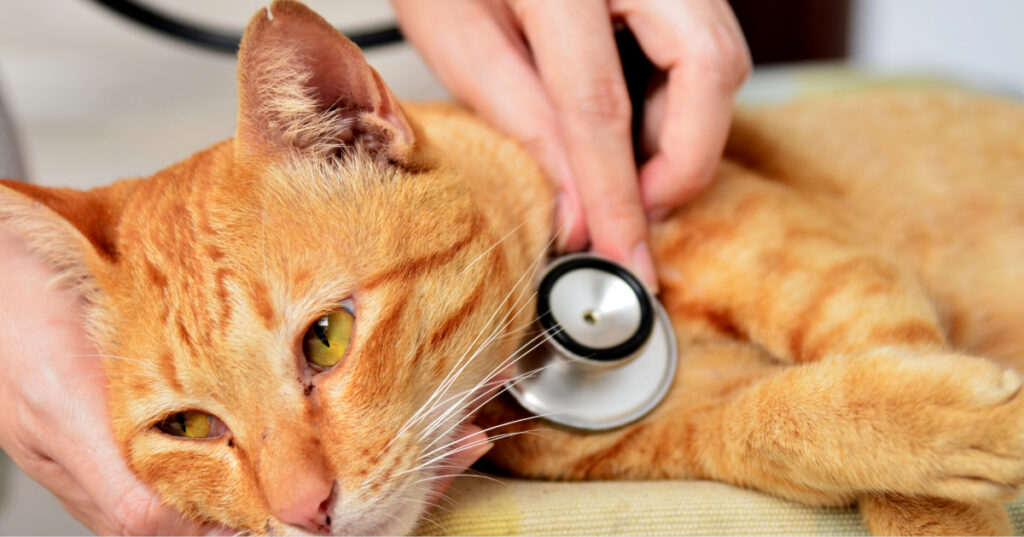
When a cat presents with a cough at World of Animals Veterinary Hospital, the diagnostic process typically begins with a thorough physical examination, including listening to the heart and lungs. Depending on the findings, your veterinarian may recommend chest X-rays to evaluate the lungs and heart, bloodwork to assess overall health, a fecal analysis to check for parasites, or additional diagnostics in more complex cases.
Getting an accurate diagnosis is essential because the treatment for feline asthma looks very different from the treatment for a bacterial respiratory infection or heart disease. Self-diagnosing a coughing cat at home can lead to delayed care and worsening of the underlying condition.
What Your Cat’s Cough Is Trying to Tell You
A coughing cat is a cat whose body is signaling that something in the respiratory system needs attention. It may be something manageable like mild asthma or a short-lived upper respiratory infection, or it may be the first clue to a more significant condition. Either way, your cat deserves a proper evaluation.
Our veterinary team at World of Animals Veterinary Hospital is experienced in diagnosing and treating respiratory conditions in cats. If your cat keeps coughing, don’t wait and hope it resolves on its own. Call one of our locations or book an appointment online today. We’re here to help you get answers and get your cat feeling better.