
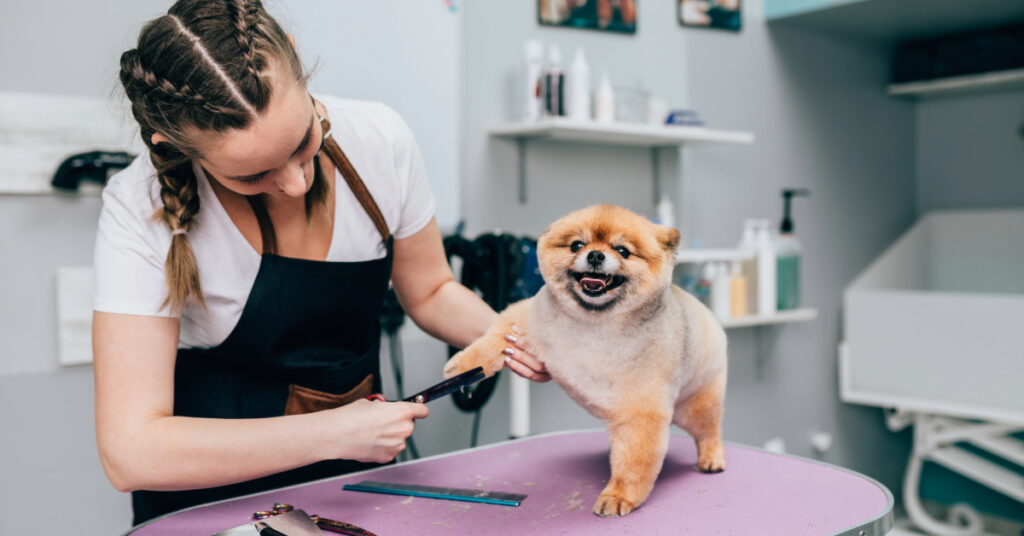
Professional dog grooming is about far more than aesthetics. Regular grooming plays a direct and meaningful role in your dog’s physical health, comfort, and overall well-being. From coat health and skin condition to early detection of lumps, parasites, and infections, professional dog grooming is one of the most underutilized tools in preventive pet care. At World of Animals Veterinary Hospital, we encourage pet owners to think of grooming not as a luxury but as a vital part of keeping their dog healthy year-round.
What Is Professional Dog Grooming?
Professional dog grooming at World of Animals refers to the comprehensive care of a dog’s coat, skin, nails, ears, and hygiene by a trained groomer. A professional grooming session typically includes bathing and drying, brushing and detangling, breed-specific or style haircuts, nail trimming, ear cleaning, and sometimes anal gland expression. Unlike a quick brush-out at home, professional dog grooming addresses the full scope of a dog’s external hygiene needs and is tailored to the specific coat type, size, and health status of each individual dog.
Why Is Dog Grooming Important for Health?
Regular professional grooming for dogs contributes to their health in multiple ways that go beyond a clean coat and a nice trim. Here’s what regular dog grooming actually does for your pet’s body:
Skin and Coat Health
A well-groomed coat distributes natural oils evenly, reduces matting, removes dead skin and hair, and allows the skin to breathe. Matted fur is one of the most common and preventable health issues groomers see. Mats don’t just look uncomfortable. They trap moisture, heat, and debris against the skin, creating an environment where bacteria and yeast thrive. Severely matted dogs can develop painful skin infections, sores, and restricted blood flow in extreme cases. Regular dog grooming prevents matting before it reaches that point.
Nail Health and Mobility
Dog nail trimming is one of the most neglected aspects of at-home pet care. Overgrown nails can alter the way a dog walks and stands, putting strain on the joints and potentially leading to orthopedic issues over time. In severe cases, nails can curl and grow into the paw pads. Professional groomers trim nails safely and consistently, and for dogs that resist nail trims at home, a professional’s calm technique and specialized tools make the process far more manageable.
Ear Health
Dog breeds with floppy ears or dense ear hair such as Cocker Spaniels, Poodles, and Basset Hounds are prone to ear infections. Professional groomers clean the outer ear canal and, in some cases, carefully remove excess hair that contributes to moisture buildup and reduced airflow. Regular ear maintenance as part of a dog grooming routine can significantly reduce the frequency of painful ear infections.
Early Detection of Health Issues
Professional dog groomers spend significant hands-on time with a dog’s body during every session. This positions them uniquely to notice changes like new lumps or bumps under the skin, skin irritation, unusual odors, parasites like fleas and ticks, and changes in coat texture or density. A good groomer will often flag these observations for the pet owner, who can then follow up with our veterinary team at World of Animals Veterinary Hospital. Think of your groomer as an extra set of eyes between vet visits.
How Often Should Dogs Be Professionally Groomed?
Grooming frequency depends heavily on breed, coat type, activity level, and lifestyle. There is no one-size-fits-all answer, but here are general guidelines based on coat type:
- Long-coated breeds (Yorkshire Terriers, Shih Tzus, Maltese, Afghan Hounds): Every 4 to 6 weeks to prevent matting and maintain coat health.
- Curly or wavy coats (Poodles, Bichon Frises, Doodle mixes): Every 6 to 8 weeks, as these coats grow continuously and mat quickly without regular trimming.
- Double-coated breeds (Huskies, Golden Retrievers, Border Collies): Every 8 to 12 weeks, with more frequent brushing at home between appointments, especially during shedding seasons.
- Short-coated breeds (Boxers, Beagles, Vizslas): Every 8 to 12 weeks for bathing and nail trimming, even if full haircuts aren’t necessary.
Even short-haired dogs benefit from professional grooming. Bathing, nail care, ear cleaning, and a thorough coat check are valuable for all breeds regardless of coat length.
The Psychological Benefits of Regular Dog Grooming
Dogs that are groomed regularly from a young age typically become more comfortable with handling, not just at the groomer, but also at the veterinarian. A dog that is accustomed to having its paws, ears, and mouth touched and examined is far easier to care for medically. Regular grooming builds tolerance for handling, which directly benefits the dog during wellness exams, diagnostics, and treatments at World of Animals Veterinary Hospital.
Additionally, dogs with clean, comfortable coats free from mats, tangles, and overgrown nails tend to be more active and comfortable in their daily movement. A dog that’s itchy, tangled, or uncomfortable in their skin is a dog that may be irritable, less playful, or more reluctant to engage with their environment.
What to Look for in a Professional Dog Groomer
Choosing the right professional groomer is an important decision. Here’s what to consider when evaluating a dog grooming professional or facility:
- Training and certification: Look for groomers with formal training or certification from recognized organizations such as the National Dog Groomers Association of America (NDGAA) or the International Professional Groomers (IPG).
- Breed experience: Some breeds require specialized grooming knowledge. Ask whether the groomer has experience with your specific breed.
- Facility cleanliness and safety: Clean, organized facilities with proper ventilation and supervised drying areas reduce the risk of injury and stress for your dog.
- Communication: A good groomer communicates openly about what they observe during the session and flags any health concerns they notice.
- Fear-free approach: Groomers who use low-stress, positive handling techniques create a better experience for anxious dogs.
Dog Grooming as Part of a Whole-Health Approach
Professional dog grooming works best when it’s part of a broader commitment to your dog’s health that includes regular veterinary care, proper nutrition, dental hygiene, and exercise. Our team at World of Animals Veterinary Hospital views grooming as a complement to preventive medicine, not a separate concern. When your dog’s coat, skin, nails, and ears are in good condition, it’s easier for our veterinarians to examine your pet thoroughly and catch changes early.
If you have questions about how often your dog should be groomed, what grooming services are appropriate for their breed or coat type, or how grooming ties into their overall health, we’re happy to discuss it at your next visit. Call one of our locations or book an appointment online today! Your dog’s comfort and health from the inside out is what we’re here for.